10 Most Used Imagined Languages

Occasionally, a work of fiction is so inventive it needs more ways to express itself than possible with just the speech it’s written in, and a new language is born. Some are merely hinted at while others are fully constructed and usable. Here are ten that in one shape or another are frequently seen and heard.

Imagined Language Use Number One: “I grok Spock”

Martian language hinted at by science fiction author Robert Anson Heinlein in his 1961 novel Stranger in a Strange Land. The word ‘grok’ means to understand a person or thing on a deep level and the word is still thrown around whenever science fiction fans gather.

i grok spok

Link

Imagined Language Use Number Two: Esperanto is easy – But can I use it for my major?

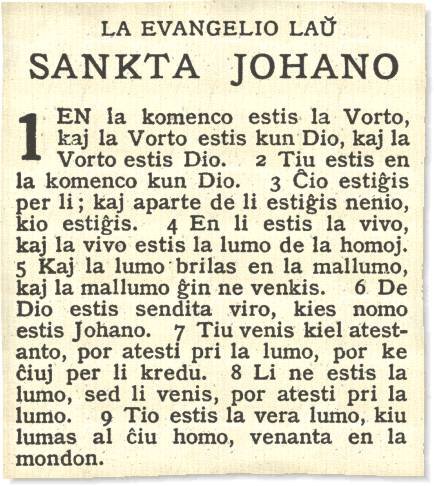
In his 1887 novel Unua Libro, L. L. Zamenhof writing under the name Doktoro Esperanto wanted to create an easy and flexible language that could serve as a universal second language. The result is Experanto a language so effortless to learn it has caught on with many people and can be found on Google searchable websites through an Esperanto portal. It is the language of instruction at Akademio Internacia de la Sciencoj in San Marino.
esperanto is easy

Link

Imagined Language Use Number Three: Alienese – What writers do when they’re bored

Spotted frequently and usually as graffiti on the television show Futurama Alienese is a complex language that translates easily into English. Fans claim they have translated these messages and found humorous hidden messages.

alienese

Link

Imagined Language Use Number Four: Just like clockwork

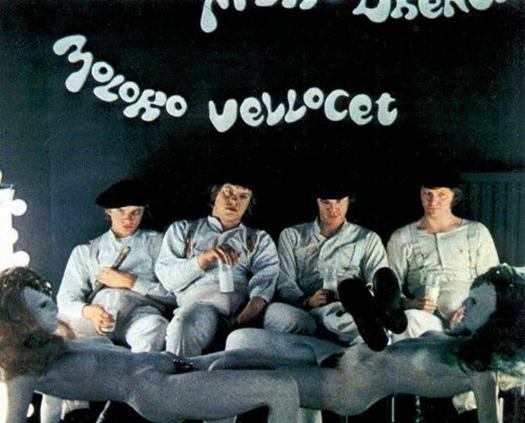
In his 1962 dystopian novel A Clockwork Orange Anthony Burgess created a slang type language called Nadsat. The language is a mix of modified Slavic and Russian as well as words simply invented by the author himself. Terms such as droog meaning friend or Bog for God are occasionally still used by college students who wish to annoy or mystify those around them.
just like clockwork

Link

Imagined Language Use Number Five: Simlish – lost in virtual translation

Simlish is a language improvised by the voice actors for the video game The Sims. The project director not wanting the extra cost and effort of recording dialogue and then having to translate it to other languages decided to use a partially constructed adlibbed one that allowed the actors to better portray the characters. Songs begin to appear in new Sim’s games and a written form of the language caught on outside the series. Artists have used the written form and singers have performed in this gibberish based speech.

simlish

Link

Imagined Language Use Number Six: The Myst Game Series

The Myst Series of video games and books created by Rand and Robyn Miller features a fictional world with a culture known as the D’ni. They’ve created a language complete with numerical symbols for the D’ni which is used throughout the game series.
the myst game series

Link

Imagined Language Use Number Seven: 1984’s Newspeak keeps up with the times

A recent renewed interest in George Orwell’s novel 1984 has newspeak being spoken again. In his book Orwell saw language shrinking as the ideas of free thought and rebellion were outlawed. The goal of the government control speech was to remove any vagueness or capacity of creativity from it. This means nothing negative can be said as one positive sounding word is given all the language use by the utilization of prefixes or suffixes. For example, the negative word stupid becomes “unsmart”. Other words become both nouns and verbs. If you listen closely you’ll find the people using newspeak every day.

1984 newspeak

Link

Imagined Language Use Number Eight: Be careful what you say

Fans of Lovecraft can tell you all about Aklo with a happy light in their eyes, but the fictional language was actually first invented by Arthur Machen for his short story “The White People” in 1899. H P Lovecraft referred to it in several works as did Alan Moore in his story The Courtyard. Aklo is only used only briefly in these works so not much is known about other than it’s being related to alien or demonic worlds.
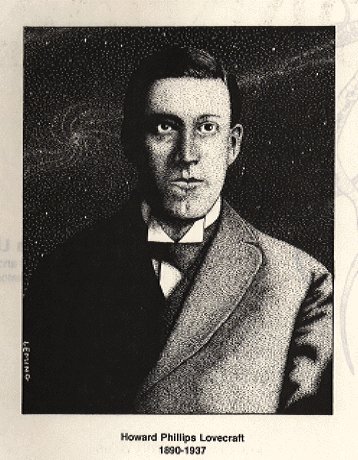
be careful what you say

Link

Imagined Language Use Number Nine: The Languages of Arda

Created by J R R Tolkien for his fantasy novels The Hobbit, The Lord of the Rings and The Simarillion this language is fully constructed developed to give a linguistic depth to the series. The Tolklang, Lambengolmor and the Elfling are mailing lists for those interested in Tolkien linguistics.
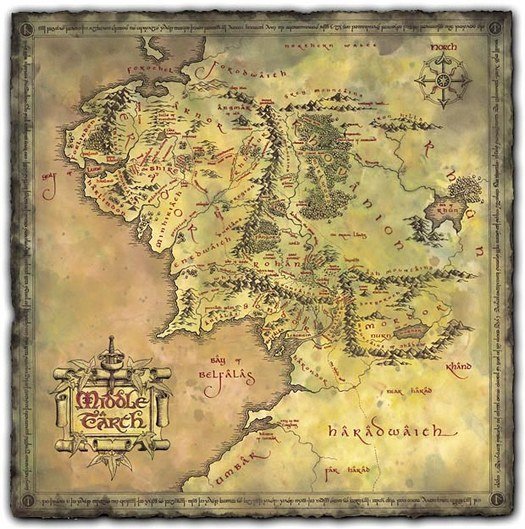
the languages of arda

Link

Imagined Language Use Number Ten: Not the language of love – Klingon

Dedicated Star Trek fans can tell you that Klingonese the language of a type of gruff, often violent alien species is first mentioned during the original series’s episode The Trouble with Tribbles. In the Star Trek III, The Search for Spock director and actor Leonard Nimoy thought the Klingons should speak a language that sounded realistic. A linguist named Mark Okrand was commissioned to develop a complete language. Books and CD’s teaching Klingonese are still available and entire marriage ceremonies have been conducted in the language by fans of the show.
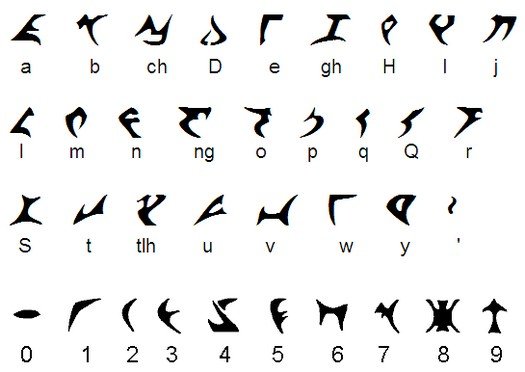
klingon

Link

Written by Kacey Stapleton – Copyrighted © www.weirdworm.com


Loading...
Loading...

Comments

  • http://esperanto.org/nask Hoĉjo

    It depends, but yes: you may be able to use Esperanto for your major. In the USA, the University of California offers several for-credit Esperanto courses. You can even win scholarships to study it. See http://esperanto.org/nask and http://linguistics.ucsd.edu/language/llp-esperanto.html

  • http://esperanto.org/nask Hoĉjo

    It depends, but yes: you may be able to use Esperanto for your major. In the USA, the University of California offers several for-credit Esperanto courses. You can even win scholarships to study it. See http://esperanto.org/nask and http://linguistics.ucsd.edu/language/llp-esperanto.html

  • http://twitter.com/natcparis NatC

    LOLcats also have a language specific to them. And it looks like it’s widely used.

  • http://twitter.com/natcparis NatC

    LOLcats also have a language specific to them. And it looks like it’s widely used.

  • http://www.lernu.net/ Miĉjo

    Although never having studied Esperanto at university myself (I learned it over the Internet), I have met someone who majored in Esperanto studies at an accredited university.

    Just a word of caution about Esperanto’s ease of learning: it is indeed very easy to learn, but, as a complete language, it is not entirely effortless. Whereas a language even as reportedly easy as English typically takes years to master, Esperanto takes months – far less than English, but not days or hours or minutes. Lest someone should spend an hour learning it, realize he/she has only just begun, then give up, believing that Esperanto renegged on its promise.

    • Bernardo Verda

      On the other hand, when I was introduced to Esperanto by my German professor — and I learned more Esperanto doing the 10-lesson postal-course he provided (each lesson on a single sheet of paper, taking 1/2 – 1 hour for each one) than I learned German in two semesters.

      Aside from the fact that my vocabulary was still fairly meager, I was well able to express myself in past, present and future tense, understood the use the conditional and logical modes, indirect and subordinate expressions, etc, etc.

      And over two decades later, my German is nearly useless to me, but I can still use Esperanto effectively enough that I recently bought an Esperanto edition of The Lord Of The Rings, to refresh my practical skills.

  • http://www.lernu.net Miĉjo

    Although never having studied Esperanto at university myself (I learned it over the Internet), I have met someone who majored in Esperanto studies at an accredited university.

    Just a word of caution about Esperanto’s ease of learning: it is indeed very easy to learn, but, as a complete language, it is not entirely effortless. Whereas a language even as reportedly easy as English typically takes years to master, Esperanto takes months – far less than English, but not days or hours or minutes. Lest someone should spend an hour learning it, realize he/she has only just begun, then give up, believing that Esperanto renegged on its promise.

    • Bernardo Verda

      On the other hand, when I was introduced to Esperanto by my German professor — and I learned more Esperanto doing the 10-lesson postal-course he provided (each lesson on a single sheet of paper, taking 1/2 – 1 hour for each one) than I learned German in two semesters.

      Aside from the fact that my vocabulary was still fairly meager, I was well able to express myself in past, present and future tense, understood the use the conditional and logical modes, indirect and subordinate expressions, etc, etc.

      And over two decades later, my German is nearly useless to me, but I can still use Esperanto effectively enough that I recently bought an Esperanto edition of The Lord Of The Rings, to refresh my practical skills.

  • Bill Chapman

    Your brief mention of Esperanto does not mention how useful it is.

    Take a look at http://www.lernu.net

    Esperanto works! I’ve used it in speech and writing – and sung in it -in about fifteen countries over recent years.

    Indeed, the language has some remarkable practical benefits. Personally, I’ve made friends around the world through Esperanto that I would never have been able to communicate with otherwise. And then there’s the Pasporta Servo, which provides free lodging and local information to Esperanto-speaking travellers in over 90 countries. In the past few years I have had guided tours of Berlin and Milan and Douala in Cameroon in the planned language. I have discussed philosophy with a Slovene poet, humour on television with a Bulgarian TV producer. I’ve discussed what life was like in East Berlin before the wall came down, how to cook perfect spaghetti, the advantages and disadvantages of monarchy, and so on.

  • Bill Chapman

    Your brief mention of Esperanto does not mention how useful it is.

    Take a look at http://www.lernu.net

    Esperanto works! I’ve used it in speech and writing – and sung in it -in about fifteen countries over recent years.

    Indeed, the language has some remarkable practical benefits. Personally, I’ve made friends around the world through Esperanto that I would never have been able to communicate with otherwise. And then there’s the Pasporta Servo, which provides free lodging and local information to Esperanto-speaking travellers in over 90 countries. In the past few years I have had guided tours of Berlin and Milan and Douala in Cameroon in the planned language. I have discussed philosophy with a Slovene poet, humour on television with a Bulgarian TV producer. I’ve discussed what life was like in East Berlin before the wall came down, how to cook perfect spaghetti, the advantages and disadvantages of monarchy, and so on.

  • Sasha

    You forgot to mention the new language that has just been created now for a new “Avatar” movie

  • Sasha

    You forgot to mention the new language that has just been created now for a new “Avatar” movie

  • anonymus

    What about pig latin?

  • anonymus

    What about pig latin?

  • Gunnar Gällmo

    Zamenhof’s “Unua libro” is not a novel; it is a presentation of the language, thus strictly non-fiction.

Become our reader - RSS

Advertising

WeirdWorm on Facebook

Advertising / Cool At Other Blogs

Audio Podcast / Listen and download!

Best on WEB / Advertising